|
Agriculture
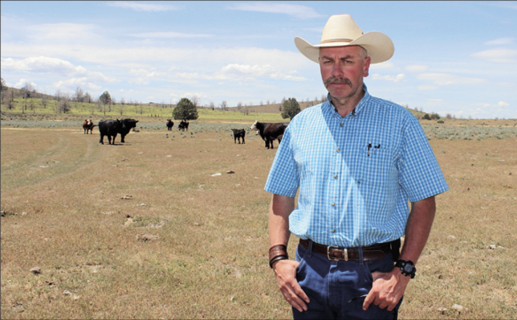 <
Lucky Ackley.
Costs spike, fields go fallow in Klamath, CFBF
AgAlert, 6/22/22. " 'That
(Upper Klamath) Lake did not exist other than wet years
before they built the Link River Dam," he said. "It was
built to store water for dry years to irrigate and farm
with, and now it's totally being misused, mismanaged,
and all the water is getting flushed down the river for
salmon or being held in the lake at unhistoric levels
for suckerfish.' He said many beef producers have had to
sell their cattle at a loss because they can't feed
them. If Ackley were eventually forced to sell off his
herd, he said, he would lose about 80 years of genetic
selection for the best cattle for this rangeland. 'You
can't just go buy that back,' he said." <
Lucky Ackley.
Costs spike, fields go fallow in Klamath, CFBF
AgAlert, 6/22/22. " 'That
(Upper Klamath) Lake did not exist other than wet years
before they built the Link River Dam," he said. "It was
built to store water for dry years to irrigate and farm
with, and now it's totally being misused, mismanaged,
and all the water is getting flushed down the river for
salmon or being held in the lake at unhistoric levels
for suckerfish.' He said many beef producers have had to
sell their cattle at a loss because they can't feed
them. If Ackley were eventually forced to sell off his
herd, he said, he would lose about 80 years of genetic
selection for the best cattle for this rangeland. 'You
can't just go buy that back,' he said."
Farm groups troubled by court's bumblebee ruling (bumble
bee is a fish), CFBF Ag Alert 6/10/22.
"The
move triggered full protection for the bumblebees under
state law, which prohibits actions that would kill, or
"take," candidate species without a permit or other
authorization."
!
Oregon Governor Kate Brown's letter to
Interior Secretary Haaland urging her to use
drought money to permanently retire Klamath
Project farmland
(because the
government is stealing our stored water to
use for other purposes.) 4/28/22
!
Klamath Water Users Association response to
Gov. Brown 5/4/22: "...KWUA is
dismayed, however, by your letter's
unexpected recommendation that funding under
the Act be used to permanently retire
irrigation water rights in the Klamath
Project and effect a shift to dry land
farming...."
!!!
KID response to Governor Brown's letter to
Interior Secretary Haaland, 5/4/22.
"...K.I.D. is concerned with your
suggestion for long-term solutions without
first engaging and discussing with local
representatives and governments responsible
for implementing such actions. Where we
specifically find issue is in the suggestion
that permanently idling some of the world’s
most productive farmland will be beneficial;
we believe this approach is overly
simplistic and short sighted as the world
population continues to grow and the need
for food security/stability is
increasing...Unfortunately, poor policy
which promotes removing water from the
former wetlands has (and continues to)
change weather patterns in the Klamath
watershed. Before agricultural modification
to the landscape, over 188,000 acres of
surface area was covered by water. This area
was once described as the Everglades of the
West...This situation has nothing to do with
drying up the Klamath River or interfering
or infringing upon water rights of
downstream tribes – this is simply about the
release of stored water that would not
otherwise be physically available but for
construction of a dam across the outlet of
Upper Klamath Lake" |
Yakima Farm Bureau president stands against solar land
rush, Capital Press 4/8/22. "...don't
call hundreds of acres of panels on steel posts screwed
into the ground "solar farms. We dropped that term a
long time ago," he said. "We call them solar-industrial
complexes...While cows and sheep can graze around
windmills, solar projects as configured now blot out
agricultural use and take up far more land."
"...states that are using Cloud Seeding as a way to try
and Mitigate this climate Change crisis is absolutely
preposterous..." Oregon Cattle Rancher's letter
to KBC with links describing Cloud Seeding agendas and
implementation 4/6/22.
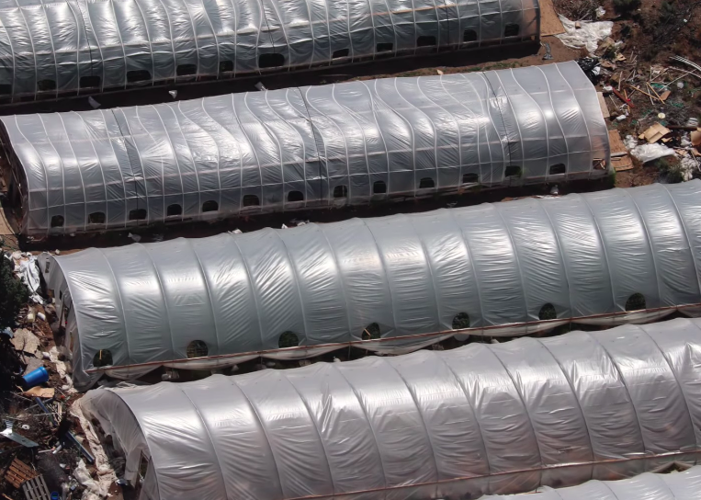 Sheriff
wants statewide state of emergency over illegal
marijuana grows, H&N 5/23/22.
"The
county estimates there could be as many as 2,000
grow sites and 5,000 greenhouses just in
California’s northernmost county. Those grows can
use as much as 3 million gallons of water per day in
region dealing with severe drought conditions..." Sheriff
wants statewide state of emergency over illegal
marijuana grows, H&N 5/23/22.
"The
county estimates there could be as many as 2,000
grow sites and 5,000 greenhouses just in
California’s northernmost county. Those grows can
use as much as 3 million gallons of water per day in
region dealing with severe drought conditions..."
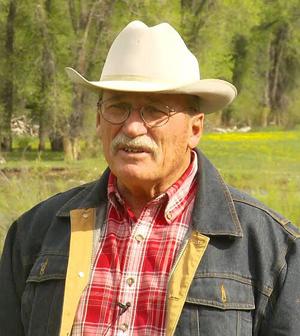 A
wake-up call to our national leaders from a Western
rancher, Family Farm Alliance President Patrick
O'Toole, 3/17/22. "...At
a time when the future of Ukraine’s ability to help feed
the outside world is at risk, the world’s best producers
— Western irrigators — are watching their water flushed
to the sea to purportedly help fish populations. Decades
of empirical evidence has failed so far to show a
positive response from those targeted fish to such water
shifting schemes. Meanwhile, our ability to increase
food productivity is further diminished..." A
wake-up call to our national leaders from a Western
rancher, Family Farm Alliance President Patrick
O'Toole, 3/17/22. "...At
a time when the future of Ukraine’s ability to help feed
the outside world is at risk, the world’s best producers
— Western irrigators — are watching their water flushed
to the sea to purportedly help fish populations. Decades
of empirical evidence has failed so far to show a
positive response from those targeted fish to such water
shifting schemes. Meanwhile, our ability to increase
food productivity is further diminished..."
How Biden's infrastructure package invests in farming, rural
communities, Capital Press 11/9/21.
"...$8.3
billion in water projects including irrigation
modernization, improved water storage and conveyance,
aquifer recharge and repairs...Klamath
habitat: Some $162 million will go toward
Klamath habitat restoration work by the U.S. Fish and
Wildlife Service..." KBC NOTE:
"improved water storage" ? We HAVE excellent water
storage which the Bureau of Reclamation, against a court
order, did not allow irrigators to use this summer. How
can we recharge our aquifer, after we must pump our
aquifer to farm because the Bureau stole our stored
water, if the Bureau won't allow us water to recharge
it? $162M to FWS for Klamath for habitat restoration?
That usually means land and water rights acquisitions.
What a deal.
Modoc Nation adds local resource and development
director, H&N 11/11/21. "The
tribes’ top priority is to revive the overgrazed
ranchlands recently purchased by the tribe near
Tulelake, with the goal of establishing a new branch
of the Modoc Nation’s bison herd."
Bill to track foreign ownership of farmland introduced
into U.S. Senate, Capital Press
11/1/21. "...foreign
investors have bought more than 35 million acres of U.S.
farmland worth $62 billion — about 2.7% of all privately
held land nationwide..."
Clear connections between Klamath marijuana grows and
Mexican cartels, H&N 10/23/21. "...Two
major marijuana busts in Klamath County just this month
led to the seizure of more than $120 million worth of
product had it made it to the illegal market...And
the watermaster has seen a 700% increase in marijuana
related water theft and other water offenses. They
haven’t been able to respond to half of them because
they are so understaffed...According
to local law enforcement, this industry is based in
large part on the miserable suffering of thousands, if
not tens of thousands, of people coming across the
border illegally, and then being pressed into indentured
servitude by cartels...”
Flood Irrigation Forever: Farmers provide crucial
habitat for migratory waterfowl, recharge aquifer,
Capital Press 10/22/21. "It
takes a lot of water, but it also puts a lot of water
back in the aquifer"..."Those
acres are surrogate dwellings providing shallow-water
habitat. The majority of the birds in the field are
looking for aquatic invertebrates, such as fly, wasp and
beetle larvae. Every time it floods, new larvae hatch as
the water recedesFish and Game has spent roughly
$131,000 in HIP funding on flood-irrigation projects
statewide...He is also monitoring birds, identifying
species and counting them, as part of his agreement with
NRCS..."
BLM
names state director for Oregon/Washington. Farmer and
agriculture policy professional Barry Bushue named to
oversee more than 16 Million acres of public land,
BLM 6/8/2020. "...Bushue was the
President of the Oregon Farm Bureau Federation for
nearly 20 years, where he advocated on behalf of the
Federation’s farming and ranching members. He also
served as the Vice President of the American Farm
Bureau, based in Washington, D.C."
Reclamation releases Interim Operating
Procedures and 2020 Operations Plan for the
Klamath Project,
Bureau of Reclamation News Release 4/22/2020. "the
Project supply from Upper Klamath Lake for
the 2020 irrigation season is approximately
140,000 acre-feet. This volume is
approximately one-third the historical
irrigation demand of the Klamath Project...The
2020 Operations Plan ... provides increased
water flows in the Klamath River for
Endangered Species Act-listed coho, as well
as Chinook salmon, and maintains Upper
Klamath Lake elevations important for
endangered Lost River and shortnose
suckers..."
KBC NOTE: Rec concludes "...Finding
of No Significant Impact related to the
Interim Operating Procedures..." however the
plan states that
"...involuntary land fallowing of productive irrigable land within
the Proposed Action Alternative area would occur leading to an
increased risk to local rural agricultural communities.”
OUR "risk" of them putting our stored water
into the ocean: No water, no farms.
KBC News Farm Bill Page (2012,
2018)
Homeland Security deems agriculture as ‘critical
infrastructure’ amid COVID-19 pandemic, AgriPulse, 3/19/2020. "The Trump administration
has labeled agriculture as a critical industry in the
wake of the Coronavirus outbreak, allowing businesses to
continue operating as usual amid current and potential
restrictions created to stem the spread of the virus."
Number of small farms is growing in Oregon, Argus
Observer
4/19/19. "...The amount of farmland in
Oregon had dropped by about 340,000 acres over the five-year
period... labor is the top cost on farm, having increased 21
percent since 2012..."
PRESS RELEASE: Reclamation
releases 2018 Klamath
Project operations and drought plans,
Bureau of Reclamation 6/22/18
5/12/18 -
USDA FSA and NRCS /
The Farm Service Agency offices in Klamath, Modoc and
Siskiyou counties are planning an informational meeting
on Tuesday May 15.
The meeting will begin at 10 a.m. at the Merrill Civic
Center 365 Front Street, Merrill Oregon. Topics include
reporting requirements needed to maintain eligibility
for USDA programs, an overview of prevented
planting-failed acreage reporting and available disaster
programs. Representatives from crop insurance, Natural
Resource Conservation District and Risk Management have
been invited to present information. For more
information contact your Farm Service Agency office.
Klamath County 541-883-6924 x 2, Modoc County Farm
Service Agency 530-233-4137 x 2, Siskiyou County Farm
Service Agency 530-842-6121 x 2. Modoc
County Farm Agency Employees will be available after the
meeting to accept acreage reports.
Modoc County Department of Agriculture
Grower Checklist
(for chemicals),
May 2018
More water needs to be allocated for agriculture,
by Brandon
Criss, Siskiyou County Supervisor District 1, 12/2/14. "Eighty percent of
Siskiyou County and 77 percent of the Tulelake
basin voted no on dam removal. When dams are a
Klamath County campaign issue, pro-dam
candidates have consistently won. With the dams
in place, we are seeing record runs of Klamath
River salmon. Tearing out existing hydropower
dams that have proven benefits for fish,
Basin
agriculture, and this past summer’s firefighting
efforts, is no solution."
Statistics
show loss and gain of Oregon farmland varies by
region.
The amount of land in farms in Oregon fell
slightly to 16,301,578 acres in 2012, H&N,
posted to KBC 12/7/14. "Klamath
County reported a whopping 21 percent decrease
in number of farms..."
The Nature
Conservancy supports 2013 Farm Bill, posted to KBC 5/14/13: "Improve
the conservation of wetlands, grasslands and private forests by maintaining
funding for easements, with a special emphasis placed on permanent easements
and the Wetlands Reserve Program (WRP), Grasslands Reserve Program (GRP) and
Farm and Ranchland Protection Program (FRPP)..."
Feds finalize animal traceability regulations, Capital Press, posted to KBC 12/21/12. "The federal government announced that it has finalized an animal-traceability rule that will require livestock to be deemed disease-free before crossing state lines."
The Food Stamp Bill, Families Protecting the Valley Newsletter 12/10/12. "...we just wish they would change the name to something more in line with what the farm bill has become, namely, the food stamp bill. 80% of the farm bill is related to the Supplemental Nutrition Assistance Program (SNAP), commonly known as food stamps"
Commentary by Norman MacLeod, followed by USDA Chief: Rural America becoming less relevant, 12/9/12. "The Agriculture Department says about 50 percent of rural counties have lost population in the past four years and poverty rates are higher there than in metropolitan areas, despite the booming agricultural economy....rural voters accounted for just 14 percent of the turnout in last month's election, with 61 percent of them supporting Republican Mitt Romney and 37 percent backing President Barack Obama. Two-thirds of those rural voters said the government is doing too many things better left to businesses and individuals...'Why is it that we don't have a farm bill?' said Vilsack."
Check out KBC News
Farm
Bill Page.
Ranchers, farmers brace for 'death tax' impact,
by William La Jeunesse, 11/16/12, Fox News
Agricultural
contributions
and
water
reallocation,
Oregon
Senator
Doug
Whitsett,
Klamath
Falls
Dist
28,
posted
to
KBC
10/11/12
Wage
increase
could
cost
jobs,
Capital
Press,
posted
to
KBC
9/20/12.
Oregon
net
farm
income,
labor
costs
jumps
in
2011,
Capital
Press,
posted
to
KBC
9/20/12.
"The
cost
to
pay
farm
employees
--
largely
because
we
have
so
many
specialty
crops
that
require
hand-harvesting
--
is
the
single
largest
expense
for
Oregon
farmers,...The
average
farmer
in
Oregon
last
year
earned
$27,000..."
Farm Bureau and
state officials blast 'heavy handed' federal labor investigations, The
Oregonian, posted to KBC 9/4/12. Followed by: "EXTORTION" Why
did the labor department drop the hammer on Oregon farmers, The Blaze
A comprehensive valuation of agriculture; a perpetual investment in Oregon's economy and environment, Oregon Department of Agriculture, 2012, by
Brent Searle, Policy Analyst/Economist. "The world population is projected to reach 9 billion in another 30-40 years, necessitating between 50-100% more food than is currently produced. Imagine – an entire additional world of food production needed from the same land (or less) than we have now! Food production capacity is a national security issue as much as anything else. The resources devoted to agriculture and food are national treasures that require preservation." (KBC NOTE: the KBRA downsizes Klamath Basin agriculture by 20-25% )
USDA announces
$170M-program to "help" some livestock sellers The Westerner, posted
to KBC 8/16/12. " * The government pays 417,000 farmers to not farm
on 30 million acres, lessening the supply of all grains. * Government
incentives result in 40% of the corn crop going into ethanol, further
lessening the supply of feed grain. * These two government
supply-restricting programs result in huge increases in the price of
feed grains, putting livestock producers in a bind."
Agriculture touches all of our lives,
Baxter Black, H&N, posted to KBC
11/26/11.
Oregon Agriculture Power
Point Presentation Thank you Brent
Searle, Special Assistant to the Director, Oregon Dept. of
Agriculture
|
2012 Farm Bill Page
|
|
Imported
Food |
Klamath Ethanol |
Bills and laws,
go
HERE |
Klamath
Basin crops and products, go
HERE. |
|
*
Traceability for Livestock Moving Interstate,
Federal Register Volume 76, Number 155, posted 8/12/11. "The proposed
requirements
would apply to cattle and bison, sheep and goats, swine, horses and other equines, captive cervids (e.g., deer and elk), and poultry...First, animals moved interstate would have to be officially identified...Second, animals moved interstate must be accompanied by an interstate certificate of veterinary inspection...We are also proposing some associated recordkeeping requirements. ..The estimated incremental costs of the proposed rule for cattle enterprises--between $14.5 million and $34.3 million, assuming official identification is a separately performed activity..."
Comments due November 9, 2011 |
National
Animal Identification System website,
http://libertyark.net
***
Call your senator regarding NAIS, 11/1/07 |
|
How to get information from the U.S.
Department of Agriculture -
website |
Latest edition of agriculture
resource directory available, H&N 10/6/05
*
Oregon pesticide use reporting system
The USDA's National Agricultural Statistics Service estimates that
in 2006, there were 2 million farms, a slight decline from 2005.
Total land in farms was 932 million acres last year, declined by
780,000 acres, a drop of nearly 1 percent from 2005.
* Obama's Executive Order 13575 Rural Council - Agenda 21, YouTube, posted to KBC 1/31/12
*
Establishment of the White
House Rural Council,
Executive Order 13575 of
President Obama, posted
to KBC 6/16/11.
Agriculture
articles
Klamath
Basin crops and products, go
HERE.
2012 Farm Bill Page
USDA Ordered to Justify Claim that it Satisfied the Injunction Awarded to R-CALF USA, Consumer Groups, Other Cattle Groups and Individual Ranchers, R-CALF 6/27/12. "It's a sad state of affairs when food producers and food consumers have to fight their own government to protect the safety of our nation's food supply, but that's exactly where we find ourselves with the Obama Administration today," concluded Bullard."
Farmers use thousands of gallons of fuel
annually. What do representatives
including Hillary Clinton and Nancy
Pelosi, media, and our President say
about the doubled cost of gas?
4:20..VIDEO
Obama seizes control over all food, farms, livestock, farm equipment, fertilizer and food production across America, Natural News 3/20/12.
California - 14 cattle trucks burned in arson at Harris Ranch, SFGate 1/11/12. (Comment sent to KBC News regarding this terrorist act: "My friend who works there) said that they are glad that no drivers were in the sleeper cabs waiting on a load. My feelings are the sheriff should hold everyone that donated to that group as accomplices and try them all together for conspiracy to arson and possible attempted murder."
A comprehensive valuation of agriculture; a perpetual investment in Oregon's economy and environment, Oregon Department of Agriculture, 2012, by
Brent Searle, Policy Analyst/Economist. "The world population is projected to reach 9 billion in another 30-40 years, necessitating between 50-100% more food than is currently produced. Imagine – an entire additional world of food production needed from the same land (or less) than we have now! Food production capacity is a national security issue as much as anything else. The resources devoted to agriculture and food are national treasures that require preservation." (KBC NOTE: the KBRA downsizes Klamath Basin agriculture by 20-25% )
Traceability
for Livestock Moving Interstate comments due
11/9/11
Siskiyou County Ag Census Trends 1992-2007, USDA
*
Traceability for Livestock Moving Interstate,
Federal Register Volume 76, Number 155, posted 8/12/11. "The proposed
requirements
would apply to cattle and bison, sheep and goats, swine, horses and other equines, captive cervids (e.g., deer and elk), and poultry...First, animals moved interstate would have to be officially identified...Second, animals moved interstate must be accompanied by an interstate certificate of veterinary inspection...We are also proposing some associated recordkeeping requirements. ..The estimated incremental costs of the proposed rule for cattle enterprises--between $14.5 million and $34.3 million, assuming official identification is a separately performed activity..."
Comments due November 9, 2011
Distrust clouds EPA, Capital
Press editorial, posted to KBC
3/28/11. "The
EPA's Clean Air Scientific
Advisory Committee has
recommended that the agency set
tougher restrictions on airborne
dust and dirt -- "coarse
particulate matter" in
government speak. An EPA draft
memo suggested setting allowable
coarse particulate matter levels
as low as 65 to 85 micrograms
per cubic meter -- about half
the 150 micrograms per cubic
meter currently allowed under
the agency's air quality
standards. Such a move could
cause vast areas in the West --
including parts of Idaho and
California -- to violate
pollution standards."
Farmer’s cut of food
dollar: 11.6 cents, Delta Farm Press, posted to KBC 3/21/11
Walden, Oregon farmers fight pesticide buffer
by Peter Beland, Oregon Business, posted to KBC 3/10/11." 'This crop field, which now produces $21,000 in income — if the federal government’s rules as full described here — you’d be down to $1,500... buffer zones could take 40 percent to 67 percent of Oregon’s farmland out of production...' A number of conservation groups represented by Oakland-based environmental law firm EarthJustice filed a lawsuit against the Environmental Protection Agency last November...". (KBC NOTE:
GEORGE SOROS
helps finance Earth Justice, which provides free legal fees for "environmentalist" and ecoterrorist groups to destroy "American Capitalism."
EarthJustice represents most of the environmental groups with voting power in the controversial
Klamath Basin Restoration Agreement.)
(EPA) Dust talks exclude public, Capital Press 3/10/11
Fights unite ag groups, Capital Press 8/27/10
Wheat
yields soar on eastside, Capital Press 8/19/10
Klamath County -
USDA Livestock Forage Disaster Program,
6/30/10
Director Jennifer Simon: Farm Bill doesn’t fit Klamath
Basin agriculture needs,
H&N 5/23/10
Obama targets
US public with call for climate action, Guardian News
6/16/09. "But the bill has run into strong opposition
from some Democratic members of Congress, especially those
from agricultural states who say that putting limits on
greenhouse gas emissions will hurt farmers' economic
interests. That could complicate Pelosi's plans of getting the
bill passed through various committees by this Friday, 19
June, and put to a vote next week."
Biological
opinion takes water from people, Capital Press editorial
6/11/09
Animal ID
critics vent objections at ag meeting, Capital Press
6/9/09
Helping
(Tulelake) Basin farmers try new practices, H&N 6/4/09
Bill requires all eggs sold in
California to be from cage-free hens,
Sac Bee 6/3/09
Back
to the drawing board for NAIS,
Capital
Press 5/28/09. "...all
but two of the 75 producers who testified opposed NAIS. These
were not wild-eyed conspiracy theorists with tin foil on their
heads. They included the state veterinarian, two statewide
cattle organizations and other operators, large and small."
Farmers Losing Crops to Endangered Fish, FOX, posted to
KBC 5/18/09
3/16:
NAIS comments due on proposed amendments.
Hay
growers consider water needs; Researcher discusses effects of
irrigation cutoff on alfalfa, Capital Press, posted to KBC
3/13/09
EPA says farm dust
requires regulation!
Capital Press , posted to KBC 3/3/09.
Obama to
focus on family farms, Capital Press 1/29/09
|
 Klamath Basin harvest brings
good prices, many challenges
Fertilizer and fuel expenses
up 30 to 50 percent in some
areas,
Capital Press 12/14/08
Klamath Basin harvest brings
good prices, many challenges
Fertilizer and fuel expenses
up 30 to 50 percent in some
areas,
Capital Press 12/14/08